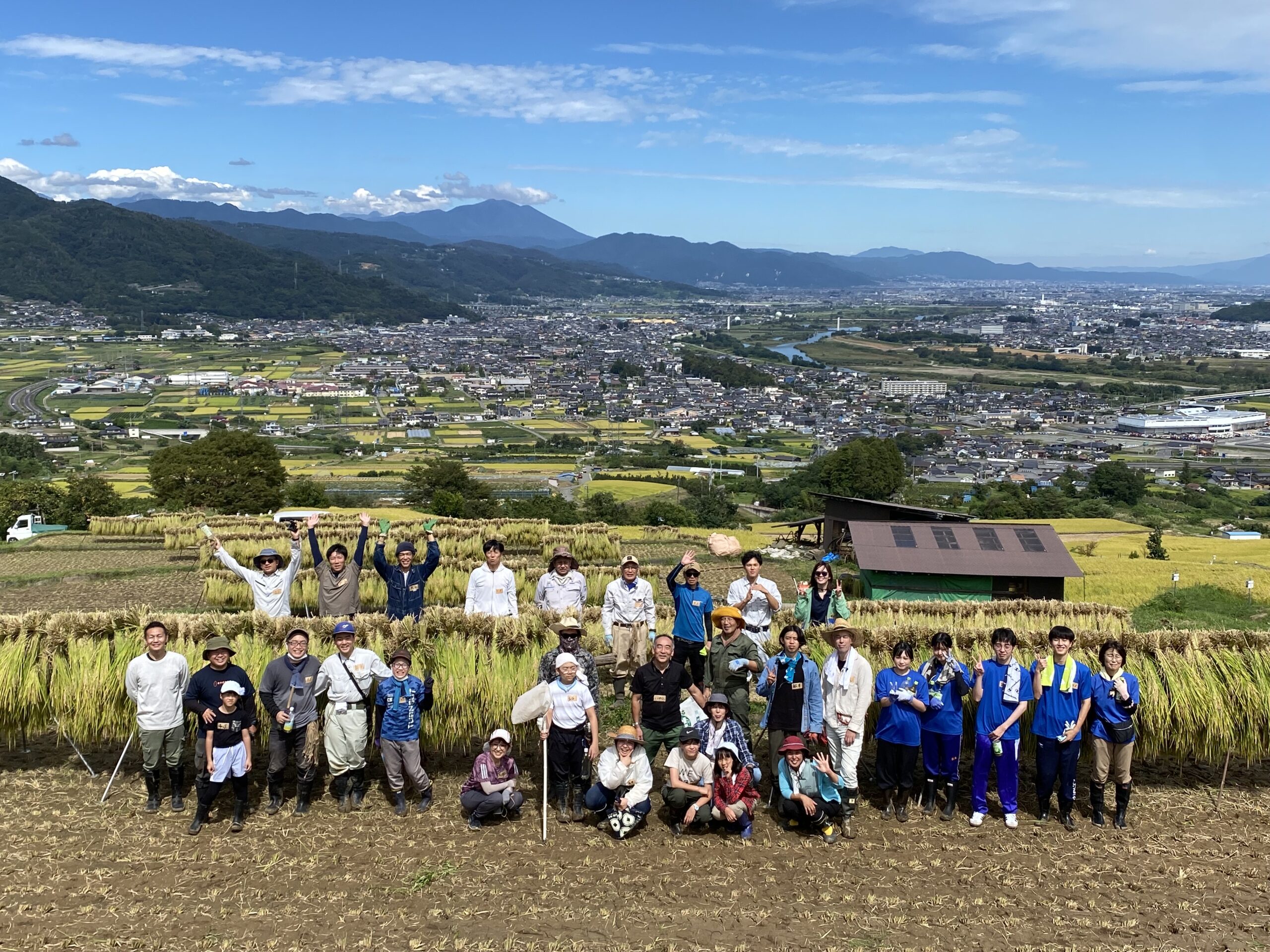
On a hillside overlooking the Zenkoji Plain in Chikuma, Nagano Prefecture, small rice paddies form the stepped landscape of the Obasute Rice Terraces.
In spring, flooded fields reflect the sky. In summer, growing rice turns the hillside green. Autumn brings the harvest. Each season reveals a different landscape, shaped by the work of the people who cultivate it.
Obasute is also known for its moon-viewing traditions, particularly “Tagoto no Tsuki,” the moon reflected in individual rice paddies. Agriculture, literature and local life have long been connected here.
On September 19, 2026, NOMAD CLIPS filmed the harvest activities of Meisho Obasute Tanada Club (名勝姨捨棚田倶楽部). This guide introduces the terraces, the people helping preserve them, and ways to support their work through participation or donations.
Help Preserve the Obasute Rice Terraces
You can support Meisho Obasute Tanada Club’s activities with a donation using the PayPay QR code below.

Please check the recipient and amount before completing your payment.
Discovering the Obasute Rice Terraces
The Obasute Rice Terraces are located in the Obasute area of Chikuma City. The Shinshu Chikuma Tourism Bureau describes a landscape of more than 1,500 small terraced paddies.
The view combines the fields stepping down the hillside with the broad Zenkoji Plain beyond. Up close, you can see rice plants and the contours of the field banks. In the distance, towns and mountains stretch across the landscape.
The paddies vary in shape and elevation, reflecting the ways generations of farmers have adapted to the terrain. As you walk, their overlapping lines change, revealing new views.
Maintaining this scenery requires regular work: supplying water, repairing field banks, cutting grass and growing rice. The harvest is one part of that continuing relationship between people and the land.
A Landscape Recognized for Its Cultural Value
| Recognition | Name |
|---|---|
| National Place of Scenic Beauty | Obasute (Tagoto no Tsuki) |
| Important Cultural Landscape | Obasute Rice Terraces |
| Japan Heritage story | “Moon Capital Chikuma,” exploring Obasute’s terraced fields and the tradition of Tagoto no Tsuki |
Learning about the farming practices and moon-viewing traditions adds another dimension to a visit, beyond the panoramic scenery.
Harvest with Meisho Obasute Tanada Club: September 19, 2026
For this visit, NOMAD CLIPS filmed the harvest activities of Meisho Obasute Tanada Club, a group working in the Obasute rice terraces.
The club undertakes terrace conservation, agricultural experiences and exchanges between local residents and people from outside the area. Its rice-planting and community activities have also been featured by the Chikuma City Japan Heritage Promotion Council.
For visitors, the terraces offer a memorable view. For those growing rice, they are also a place of everyday work. Harvest time offers a glimpse of the effort that keeps this landscape alive.
Watch our footage, filmed on September 19, 2026, on the official NOMAD CLIPS TikTok account.
@nomad.clips.japan
Harvest activities with Meisho Obasute Tanada Club. Filmed on September 19, 2026.
If the embedded video does not appear, watch it here.
This video records the fields and activities filmed at that time. It does not represent the harvest status of all the terraces or current conditions.
Would you like to help care for this landscape?
Meisho Obasute Tanada Club is looking for people interested in helping sustain the terraces and participating in its activities. Visit the club’s Instagram account to learn about its work and ask about opportunities to get involved.
What Is “Tagoto no Tsuki”?
“Tagoto no Tsuki” refers to the moon reflected in individual rice paddies when they are filled with water around planting time.
The Agency for Cultural Affairs describes this scene in late May. However, you cannot see a separate moon reflected in every paddy simultaneously from one fixed viewpoint. As your position changes, reflections become visible in different fields.
The ukiyo-e artist Utagawa Hiroshige depicted a striking scene with moons reflected across numerous paddies. Knowing this artistic interpretation makes it easier to appreciate how Obasute has inspired people’s imaginations.
Water levels and rice growth vary between fields, while moon visibility depends on the weather and time of night. Enjoy the scenery from paths and areas open to visitors.
Water and the Knowledge Behind the Terraces
Growing rice on a hillside requires a dependable water supply and a way to distribute it across the fields.
According to the Agency for Cultural Affairs, Oike, a reservoir collecting spring water above the terraces, was established around the beginning of the Edo period. This helped rice cultivation spread across the slope. Water from Oike, known locally as “himizu,” and inherited water-sharing practices have supported cultivation.
As you explore, look at the channels and changes in elevation as well as the fields themselves. They reveal practical knowledge developed through working with this terrain.
The Terraces Through the Seasons
Spring: Fields Reflecting the Sky
Around rice-planting time, water-filled paddies reflect the sky and surrounding scenery, making the outline of each terrace visible. If you hope to see the moon reflected in the fields, check local water conditions, moonrise times and the weather before visiting.
Summer: A Green Hillside
As the rice grows, the landscape changes from reflective water to green fields. Following the curves of the banks and the contours of the hillside reveals details that are easy to miss from a distant viewpoint.
Bring drinking water and a hat for daytime walks.
Autumn: Ripening Rice and Harvest
Autumn brings ripening rice and the changing appearance of fields during harvest. The Shinshu Chikuma Tourism Bureau also highlights “hazekake,” the practice of hanging harvested rice on racks to dry.
Harvest timing differs by field and weather conditions. Where work is underway, give priority to farm workers and vehicles, and observe from appropriate places.
Winter: The Shape of the Land
Without standing rice, the steps of the terraces and the shapes of the field banks become easier to see. Snow and ice can affect walking conditions, so plan your visit according to the conditions on the day.
Places to Explore Nearby
Chorakuji Temple: Obasute’s Moon-Viewing Tradition
Chorakuji Temple offers a connection to the people who have admired the moon at Obasute. The poet Matsuo Basho visited the area and wrote about his journey in “Sarashina Kiko.” Poetry monuments in the temple grounds reflect this long relationship between the landscape and literature.
Shijuhachimaida: The Forty-Eight Rice Paddies
Shijuhachimaida is closely associated with Tagoto no Tsuki. The Shinshu Chikuma Tourism Bureau introduces it as one of the earlier areas developed into terraces, with a name traditionally linked to the forty-eight vows of Amida Buddha.
Obasute Station: Views Across the Zenkoji Plain
JR Obasute Station offers views of the terraces and the Zenkoji Plain. After looking closely at the rice and field banks, viewing the wider area from the station helps put the farmland and surrounding settlements into perspective.
Keep passenger routes clear and follow railway signs and instructions while visiting.
Access and Preparing for Your Walk
| Location | Obasute area, Chikuma City, Nagano Prefecture, Japan |
|---|---|
| Rail access point | Obasute Station on the JR Shinonoi Line |
| Nearby places of interest | Chorakuji Temple, Shijuhachimaida, Obasute Station and the Chikuma City Japan Heritage Center |
| Tourist information |
Shinshu Chikuma Tourism Bureau’s Obasute area guide |
The terraces cover a broad area. If you are driving, identify the places you want to visit and suitable parking in advance. Parking is available at the Chikuma City Japan Heritage Center, but follow its current conditions and any event-related instructions.
Do not park on farm access roads or in spaces needed for agricultural work. Wear comfortable walking shoes, and check your return train times if you are arriving by rail.
Visiting and Photographing Working Farmland
The Obasute terraces remain active farmland. When taking photographs or videos, respect the people working here and help keep their access routes clear.
- Do not enter rice paddies or restricted areas.
- Avoid damaging field banks or irrigation channels.
- Keep paths clear of tripods and bags.
- Give priority to farm vehicles and local residents.
- Ask before photographing people working at close range.
- Keep noise and bright lighting to a minimum at night.
A small change of viewpoint from an accessible path can reveal a different arrangement of terraces. Take your time and look for a view that captures the shape of the land.
Support the Future of the Obasute Rice Terraces
Rice planting and harvest are only part of the work needed to maintain the terraces. Grass cutting, water management and repairs to field banks continue throughout the farming year.
Meisho Obasute Tanada Club is seeking people interested in helping care for the terraces and joining its activities. Donations are another way to support the club’s work.
Interested in Getting Involved?
If you would like to contribute to terrace conservation, learn about agricultural work or take part in local activities, please contact Meisho Obasute Tanada Club.
Ask the club directly about available opportunities, activity dates and participation requirements. Its Instagram account is a good starting point for learning about its work.
Ask About Participation on Instagram →
Instagram:
@chikuma_obasutetanada
When contacting the club, you can mention that you learned about its activities through NOMAD CLIPS.
Official Information and References
-
Agency for Cultural Affairs: Japan Heritage — Moon Capital Chikuma
-
Shinshu Chikuma Tourism Bureau: Sarashina, Obasute and Yawata
-
Chikuma City Japan Heritage Promotion Council: Tanada Club Rice-Planting Activities (2021)
-
Meisho Obasute Tanada Club on Instagram
-
NOMAD CLIPS on TikTok: Obasute Harvest Video
Filmed by NOMAD CLIPS on September 19, 2026. Please check the relevant official sources for current facility conditions and participation details. Linked information may be in Japanese.
Help Keep This Landscape Alive
The people who cultivate and care for these fields sustain the scenery of Obasute. Please consider supporting the work of Meisho Obasute Tanada Club.
Support Through a Donation
To donate using PayPay, please use the QR code above.
Please check the recipient and amount before completing your payment.
Support Through Participation
Contact the Club About Getting Involved →
Meisho Obasute Tanada Club
@chikuma_obasutetanada